
Across healthcare, providers are advancing care while facing a tough balancing act—meeting growing demand, managing tight budgets, and responding to the urgent need for more sustainable practices. Circularity offers a way forward. It’s not just a buzzword—it’s a smarter, more responsible approach to managing medical technology.
In imaging, circularity means rethinking how systems are designed, used, and maintained. The goal is simple: extend the life of valuable equipment through upgrades, reconditioning, and reuse. By doing so, healthcare facilities can cut down on waste, preserve resources, and maintain strong clinical performance over time.
Built to Last: Upgrading & Reconditioning High-Value Systems for Sustainable Care
Extending the life of imaging systems can take many forms. On-site upgrades allow facilities to enhance performance without replacing entire systems, while reconditioned solutions offer a practical alternative for organizations planning new installations.
Certified GoldSeal™ systems are a clear example of circularity in action. These reconditioned systems integrate the latest available technology1 through software upgrades and reuse high-value components that still have years of reliable service ahead. Hybrid solutions—such as combining pre-owned MRI magnets with new electronics—further demonstrate how circularity can be both innovative and responsible. MRI magnets, for instance, are built to last more than 30 years, and just by reusing a single magnet, up to 80 tons of CO₂ emissions are avoided2 — a tangible step toward reducing the carbon footprint of healthcare.
A Real-World Example: Restoring Care Through Circular Solutions
When a hospital in Poland was hit by a devastating flood, its imaging department was left without an MRI system—shutting down essential diagnostic services. The team needed a quick, reliable, and affordable solution to get back on track and continue supporting patient care.
Their choice? A GoldSeal SIGNATM Voyager CPO.
For the hospital, it was their first experience with a reconditioned system, but the benefits were clear:
-
High-definition imaging with the latest software1, including AIR™ Recon DL, delivering up to 50% faster scan times and up to 60% sharper images with improved SNR 3.
-
A cost-effective alternative, without compromising reliability or upgrade flexibility
-
Seamless installation and support, minimizing downtime
-
A responsible solution that extends the lifecycle of premium components and reduces environmental impact
As Małgorzata Delimat, President of the VitaScan Diagnostic Center in Poland, shared:
“The GoldSeal Voyager was a rational and sound decision. It allowed us to restore diagnostic services quickly, deliver high-quality imaging with AIR™ Recon DL, and make a sustainable choice that reflects our values.”4
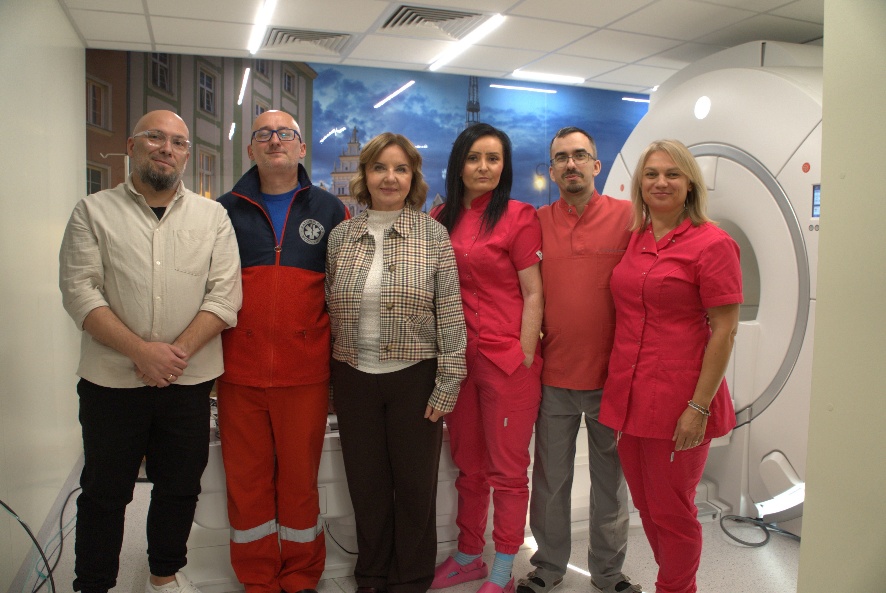
Restored facility: VitaScan staff and reconditioned MRI SIGNA Voyager system in a renewed imaging suite.
Circularity in Action
Having repair centers located in the heart of Europe not only reduces transportation time, but it also helps lower CO₂ emissions and ensures faster turnaround for healthcare providers. These facilities are essential to making circularity work in practice, offering lifecycle services that support both resource efficiency and operational performance.
Among them, the European Repair Center (ERC) in France and the Hungary Europe Repair Operation Center (H.E.R.O.) play a key role:
-
ERC specializes in restoring critical imaging components, repairing ~3,000 units annually5 and helping extend the life of advanced equipment.
-
H.E.R.O. focuses on full-system reconditioning, targeted repairs, and harvesting reusable parts. Since 2021, nearly 300 reconditioned systems have been processed 5.
Together, these centers contribute to a broader circular economy in healthcare. Across global operations, more than 8,050 systems have been recovered, with 92%5 reused or recycled, and over 7.8 million kilograms of material repurposed6, helping reduce waste and lower the carbon footprint of medical technology.
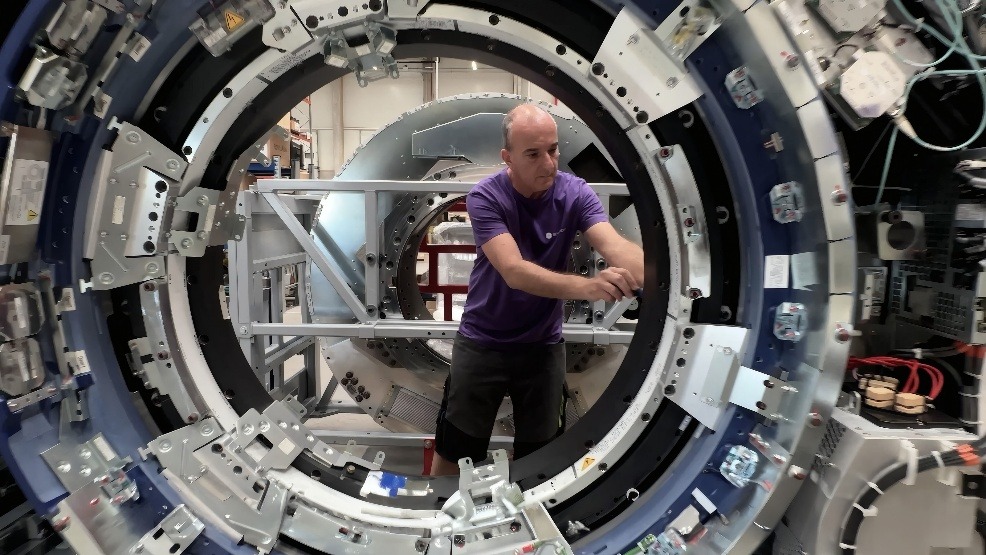
GE HealthCare technician inspecting the interior of a CT scanner at the European Repair Center (H.E.R.O.)
A Strategic Advantage for Healthcare Providers
Circularity isn’t only about environmental responsibility —it’s also about resilience. By adopting lifecycle solutions like upgrades and reconditioned systems, hospitals can:
-
Improve access to advanced technology
-
Reduce operational risk and downtime
-
Support long-term planning and financial resilience
-
Align with evolving ESG expectations
As healthcare evolves, circularity is helping shape a more sustainable and future-ready approach to care.
(1) GE HealthCare software. GoldSeal products can integrate the latest compatible GE HealthCare software version upon customer request.
(2) * Based on internal estimates. The Magnet/system carbon footprint are based on screening Life cycle assessment (sLCA) estimated with SimaPro. The CO2 emission is estimated using the weight and the material type of the system components, energy consumption and mix of energy source in manufacturing, assumptions related to recyclability of raw materials, and transportation mode for shipping the system from the factory to the customer.
(3) Performance data based on GE HealthCare internal measurements; results may vary by site and protocol. Not specific to this customer’s experience.
(4) The statements by GE HealthCare’s customers described here are based on their own opinions and on results achieved in their unique setting. Since there is no ‘typical’ hospital/clinical setting and many variables exist (hospital size, case mix, staff expertise, etc.), there can be no guarantee that others will achieve the same results.
(5) From GE HealthCare internal data
(6) Values include Imaging, Magnets, Magnet Upgrades, Ultrasound, and Surgery products for 2024. Imaging and Ultrasound values based on USCAN, EMEA, India, and Japan.
JB09057XE
